


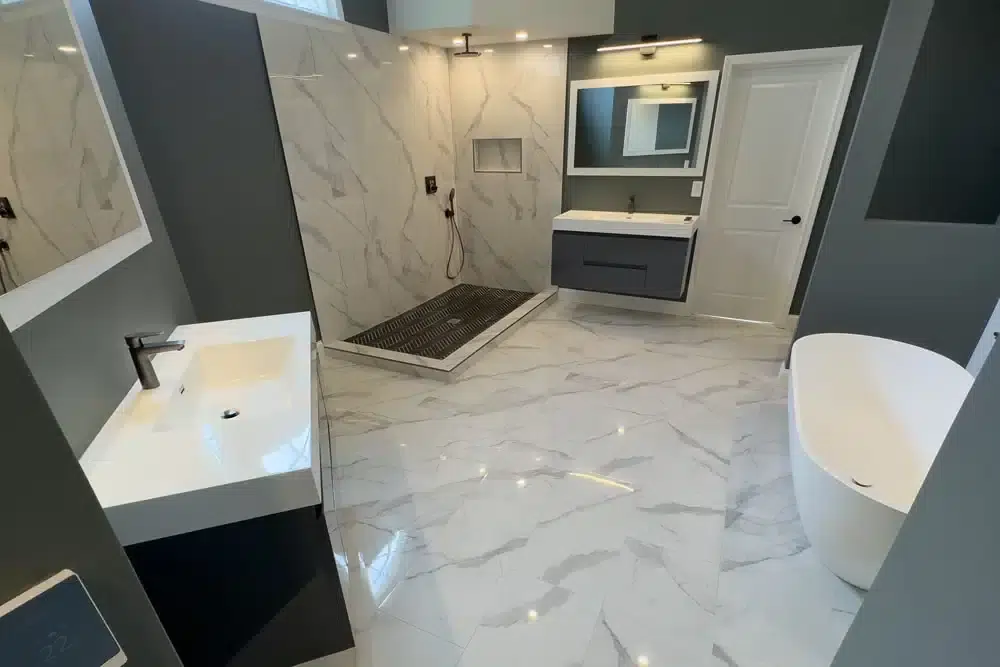
A small bathroom can often feel cramped and restrictive, especially when storage, lighting, and layout are not planned thoughtfully. However, limited square footage does not have to mean limited comfort or style. With the right design choices and practical adjustments, a compact bathroom can feel open, functional, and visually balanced. Understanding how light, colour, layout, and materials interact helps homeowners make informed decisions that improve both usability and appearance without expanding the physical space.
Many homeowners begin by gathering inspiration and understanding what is possible within small bathroom renovations. Viewing real renovation examples can help visualize how thoughtful layouts and finishes improve space perception. Exploring completed projects such as those shown in this small bathroom renovation gallery can provide useful ideas before planning changes.
Use Light Colors to Open the Space
Color plays a significant role in how a bathroom feels. Light shades on walls, floors, and ceilings reflect more light, which helps make the space appear larger and less enclosed. Whites, soft neutrals, and pale greys are commonly used because they create continuity and reduce visual breaks. When surfaces blend seamlessly, the eye moves more freely around the room, giving the impression of added space.
Using similar tones across tiles, paint, and fixtures also minimizes contrast. This approach avoids drawing attention to boundaries, which can otherwise emphasize the room’s size. Even in bathrooms where accent colours are desired, keeping them subtle ensures the space remains visually open.
Improve Lighting for a Brighter Feel
Poor lighting can make even a well designed bathroom feel smaller than it is. Increasing light levels helps eliminate shadows that compress the room visually. Layered lighting is often effective, combining ceiling lights with task lighting around mirrors and vanity areas.
Natural light, when available, further enhances openness. Frosted windows or skylights allow light to enter while maintaining privacy. Reflective surfaces such as mirrors and glossy tiles also help distribute light more evenly, reducing dark corners that make the space feel confined.
Choose the Right Fixtures and Fittings
Oversized fixtures can overwhelm a small bathroom and limit movement. Compact vanities, wall mounted toilets, and slim profile sinks help free up floor space and create a more open layout. Wall mounted elements expose more of the floor, which visually expands the room and makes cleaning easier.
Clear glass shower screens are another effective option. Unlike curtains or frosted enclosures, transparent panels allow the eye to travel across the entire space without interruption. This uninterrupted view makes the bathroom feel less segmented and more spacious.
Maximize Storage Without Clutter
Clutter quickly makes a small bathroom feel crowded. Smart storage solutions help keep essential items accessible while maintaining a clean appearance. Recessed shelves, mirrored cabinets, and vertical storage units use space efficiently without encroaching on floor area.
Built in storage within walls or under vanities helps reduce the need for bulky cabinets. Keeping countertops clear further enhances the sense of space, allowing surfaces to appear larger and more organized.
Use Large Tiles and Simple Patterns
Tile size and layout significantly influence how spacious a bathroom feels. Larger tiles reduce the number of grout lines, which creates a smoother and more continuous look. Fewer visual breaks make surfaces appear broader and more expansive.
Simple patterns and consistent tile layouts are generally more effective than busy designs in small spaces. Diagonal tile placement on floors can also add visual depth, subtly increasing the perception of width or length.
Keep the Layout Efficient
An efficient layout ensures every element has a purpose without unnecessary overlaps. Positioning fixtures thoughtfully improves flow and usability. For example, placing the shower at the end of the room or aligning fixtures along one wall can help open up the remaining space.
Avoiding unnecessary partitions and doors also contributes to a more open feel. Where privacy is required, sliding doors or pocket doors are often more space efficient than traditional hinged options.
Use Mirrors Strategically
Mirrors are one of the most effective tools for making a small bathroom feel larger. A large mirror above the vanity reflects light and creates the illusion of depth. Extending mirrors across a wall amplifies this effect, making the room feel wider and brighter.
Mirrored surfaces integrated into storage units serve a dual purpose, providing functionality while enhancing spatial perception. Strategic placement ensures mirrors reflect light sources rather than dark corners.
Maintain Visual Continuity
Consistency in materials and finishes helps unify the space. Using the same flooring throughout the bathroom or extending wall tiles into the shower area avoids visual breaks that can shrink the room’s appearance.
Limiting the number of materials and finishes also helps maintain a calm and cohesive look. When the design feels simple and intentional, the bathroom naturally appears more spacious.
Plan Changes Carefully
Before making changes, it helps to understand how design decisions impact both aesthetics and practicality. Reviewing renovation options and understanding available services supports better planning. Homeowners can explore general renovation information through this bathroom renovation resource to gain insight into layout options, materials, and planning considerations.
For personalized guidance or to discuss layout possibilities, contacting a renovation specialist can help clarify next steps. Enquiries can be made through this bathroom renovation contact page or by calling directly at 7803947841.
Final Thoughts
Making a small bathroom feel bigger is less about adding space and more about using existing space wisely. Through thoughtful color choices, improved lighting, efficient layouts, and smart storage, even the smallest bathroom can feel open and comfortable. Careful planning and attention to detail allow homeowners to create a space that feels balanced, functional, and visually inviting without unnecessary complexity.
Frequently Asked Questions
1. How can I make a small bathroom look bigger without remodeling?
You can make a small bathroom feel bigger by using light colors, improving lighting, adding large mirrors, reducing clutter, and choosing compact fixtures without changing the layout.
2. What colors make a small bathroom feel more spacious?
Light colors such as white, soft neutrals, pale grey, and pastel tones reflect light better and create a more open, airy appearance in small bathrooms.
3. Do mirrors really make a small bathroom feel bigger?
Yes, mirrors reflect light and create the illusion of depth, making a small bathroom appear wider and brighter, especially when placed strategically above vanities or across walls.
4. What type of lighting is best for a small bathroom?
Layered lighting works best, combining ceiling lights with task lighting around mirrors. Natural light, skylights, and reflective surfaces further enhance brightness and openness.
5. Are large tiles better for small bathrooms?
Yes, large tiles reduce grout lines and visual breaks, creating a smoother and more continuous look that helps a small bathroom feel larger and less cluttered.