


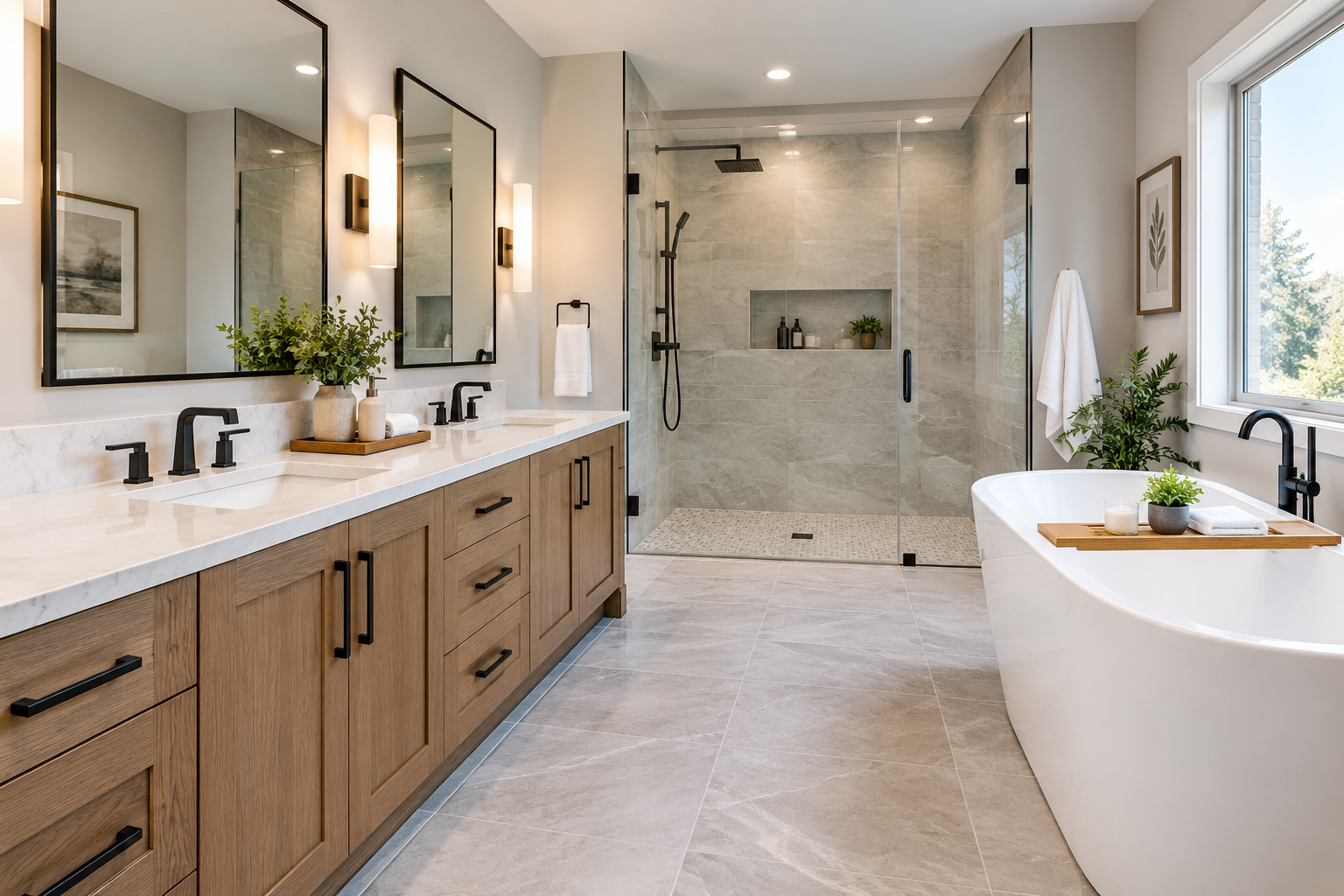
A bathroom is one of the smallest rooms in a house, yet it is used every single day, often at the busiest and most tired moments. When the tile is cracked, the vanity is cramped, or the fan cannot clear steam, the room starts to work against you. Many homeowners in Sherwood Park live with these problems for years because a renovation feels like a large and uncertain project. Our bathroom renovation services in Sherwood Park are built around making that project clearer, from the first measurement to the final walkthrough. At VK Renovations, we plan each bathroom around the way the household actually uses it. In this guide, we explain what a renovation involves, how the stages unfold, what affects the budget, and how to choose a bathroom remodel contractor with confidence.
Signs Your Bathroom Is Ready for a Renovation
Not every bathroom needs a full rebuild, but some problems are hard to fix with surface repairs. These are the signs we see most often during first visits:
- Soft spots in the floor near the tub, toilet, or vanity
- Grout and caulking that keep failing, even after repeated repairs
- Dark staining or a musty smell that returns after cleaning
- A tub or shower that has lost its finish or no longer drains properly
- Outdated plumbing fixtures that drip or have low water pressure
- Poor lighting that makes the room feel small and dim
- A layout that leaves no room for storage or comfortable movement
- A fan that is too weak to clear moisture after a hot shower
Moisture damage deserves particular attention. Water that escapes behind tile or under a tub can rot the subfloor and framing long before it shows on the surface. Finding it early keeps the repair smaller and the cost lower.
What Bathroom Interior Renovations in Sherwood Park Involve
Bathroom interior renovations in Sherwood Park range from a refresh of finishes to a complete gut and rebuild. Most projects fall into one of three levels:
- Cosmetic update: new paint, vanity, faucet, mirror, lighting, and accessories, with the layout and plumbing locations unchanged.
- Mid-range renovation: new tub or shower, tile, flooring, vanity, toilet, and fixtures, with some adjustments to plumbing and electrical.
- Full remodel: removal of everything down to the studs, repair of any hidden damage, a reworked layout, new plumbing and wiring, waterproofing, ventilation, and all new finishes.
The right level depends on the condition of the room behind the surface. A bathroom that looks tired but is structurally sound may only need a mid-range update. A bathroom with water damage or a poor layout usually benefits from a full remodel, since fixing one problem at a time ends up costing more.
Planning the Layout Before Choosing Finishes
Many homeowners begin with tile samples and paint colours, but layout decisions come first because they affect everything else. A few of the questions we work through at the start:
- Who uses the bathroom, and at what times of day?
- Would a walk-in shower serve you better than a tub, or do you need to keep the tub for children?
- Is there enough clearance in front of the toilet and vanity for comfortable movement?
- Does the door swing into a space that could be better used?
- Where will towels, toiletries, and cleaning supplies be stored?
- Does anyone in the household need grab bars, a bench, or a curbless entry now or in the future?
Small adjustments often matter more than large ones. Moving a door to a pocket style, replacing a bulky vanity with a floating one, or recessing storage into the wall can open up a small room without changing its footprint.
How the Renovation Process Unfolds
A clear sequence reduces surprises. Our projects generally follow these steps:
- Consultation and measurements: we visit the home, listen to your priorities, and measure the space.
- Design and selections: we confirm the layout, materials, fixtures, and finishes, and review them with you.
- Scope and estimate: we put the work, materials, and timeline into writing before anything begins.
- Permits and scheduling: where permits or inspections are required, we arrange them and set dates for each trade.
- Demolition: we protect the rest of the home, remove the existing bathroom, and check what is hidden behind walls and floors.
- Rough-in work: plumbing, electrical, and framing changes are completed and inspected before surfaces are closed up.
- Waterproofing and surfaces: we install waterproof membranes, backer board, tile, and flooring.
- Fixtures and finishing: vanity, toilet, shower hardware, lighting, paint, and trim are installed.
- Final walkthrough: we review the finished room with you and address any remaining details.
Each stage is checked before the next one begins. That is especially true of waterproofing, which cannot be corrected easily once tile is in place.
Waterproofing and Ventilation: The Parts You Do Not See
The most important work in a bathroom is often the least visible. Two areas deserve more attention than any tile choice.
Waterproofing keeps moisture out of the walls and floor. In a shower, that means a properly sloped base, a continuous membrane or waterproof system, and carefully sealed corners and niches. Tile and grout are not waterproof on their own, so the layer beneath them does the real protecting.
Ventilation removes the humid air that causes mould, peeling paint, and swollen trim. An exhaust fan should be sized for the room and vented to the outside, never into the attic. In Alberta, where long winters keep windows closed for months, good ventilation matters even more because moisture has nowhere else to go.
Building for Alberta Conditions
Sherwood Park homes face a climate that puts its own demands on a bathroom. Cold exterior walls can create condensation, and in older homes poor insulation or a weak vapour barrier can make that worse. Dry winter air can also cause wood vanities and trim to shrink and crack if the finish is not suited to the environment.
A few practical choices help:
- Heated flooring, which takes the chill off tile during winter mornings
- Moisture-resistant materials for walls, vanities, and trim
- Properly insulated exterior walls with a continuous vapour barrier
- A quiet, efficient exhaust fan that runs long enough after each shower
- Durable finishes that tolerate both humidity and seasonal dryness
Older homes may also hide surprises, such as outdated plumbing, aluminum wiring or limited venting. Opening the walls is the only way to know for certain, so we plan for the possibility of hidden conditions before work begins.
Choosing Materials That Last
Materials affect both the look and the working life of the room. Some points we discuss with homeowners:
- Floor tile: choose a slip-resistant finish rated for wet areas, with grout lines kept narrow enough to clean easily
- Wall tile: larger formats mean fewer grout lines, though they need a flatter surface and careful installation
- Vanities: solid wood and plywood construction handle humidity better than low-grade particleboard
- Countertops: quartz resists staining and needs little upkeep, while natural stone needs periodic sealing
- Fixtures: select solid, well-known hardware with available replacement parts
- Paint: use a moisture-resistant bathroom formula with a finish that can be wiped clean
Choosing slightly better materials in the areas that take the most wear often costs less over time than replacing cheaper ones.
What Affects the Cost of a Bathroom Renovation
Costs vary widely, and any honest estimate depends on the details of your room. The main factors include:
- The size of the bathroom and the extent of demolition
- Moving plumbing, such as relocating a toilet or shower
- Hidden damage found after the walls and floors are opened
- The grade of tile, vanity, fixtures, and countertops
- Custom work, such as built-in niches, glass enclosures, or special lighting
- Electrical upgrades and heated flooring
- Permit requirements and inspections
Moving fixtures usually costs more than keeping them where they are, since it affects drains, vents, and framing. Spending on waterproofing, ventilation, and quality installation tends to give a better return than spending on the most expensive finish.
We recommend keeping a contingency of roughly ten to fifteen percent of the budget for unexpected findings, especially in older homes. If you would like to see how finished projects look, you can browse our completed projects for layouts and material combinations.
Questions to Ask Any Bathroom Remodel Contractor
Choosing a bathroom remodel contractor is as important as choosing the design. These questions help you compare your options:
- Are you licensed and insured, and can you provide proof?
- Who will do the plumbing and electrical work, and are those trades certified?
- Will you provide a written scope, timeline, and payment schedule?
- How do you handle hidden damage or changes to the plan?
- How do you protect the rest of the home from dust and water?
- What warranty covers the work, and what does it include?
- Who will be on site each day, and who is my main contact?
A contractor who answers these clearly and in writing is usually one who plans carefully. If you want to understand where renovations most often go wrong before you start, our article on bathroom renovation mistakes to avoid goes through the common problems and how to prevent them.
Planning for Life During the Renovation
A bathroom renovation usually takes several weeks, and your daily routine will change during that time. Some preparation makes the period easier:
- Decide in advance which other bathroom or facilities the household will use
- Clear the surrounding hallway and nearby rooms, so tradespeople have access
- Expect noise during demolition and some dust, even with protection in place
- Order special items, such as custom glass or imported tile, early, since lead times can be long
- Keep your selections final once work begins, because late changes can delay the schedule
Good communication matters most. A short daily update on what was completed and what comes next keeps everyone informed.
Looking After Your New Bathroom
A renovated bathroom lasts longer with simple habits:
- Run the exhaust fan during every shower and for about twenty minutes afterward
- Wipe down wet surfaces and glass to reduce mineral buildup
- Reseal grout and natural stone on the schedule recommended for your materials
- Check caulking around the tub, shower, and sink once or twice a year
- Address small leaks right away, before water reaches hidden areas
Talking With Us About Your Bathroom
At VK Renovations, we believe a bathroom project should start with clear information, not pressure. We explain the scope plainly, put the details in writing, and keep you informed from the first visit to the final walkthrough. If you are considering a renovation, even at an early stage, you can reach out to our team, and we will talk through your goals, your space, and the options that make sense for your home.
Frequently Asked Questions
1. How long does a bathroom renovation in Sherwood Park usually take?
A cosmetic update may take about a week, while a mid-range renovation often takes two to four weeks. A full remodel with layout changes can take longer, especially if hidden damage is found or custom materials have long lead times.
2. Do I need a permit for a bathroom renovation?
It depends on the scope. Work that involves moving plumbing, changing electrical wiring, or altering walls often requires permits and inspections. We confirm what applies to your project before work begins.
3. How much should I set aside for unexpected costs?
We recommend a contingency of roughly ten to fifteen percent of the total budget. Older homes in particular can reveal water damage, outdated wiring, or plumbing once the walls and floors are opened.
4. Should I choose a walk-in shower or keep the bathtub?
It depends on how your household uses the space. A walk-in shower suits adults who want an open, easy-to-clean layout, while a tub remains useful for young children and for people who enjoy soaking. If you have only one bathroom, keeping a tub may be worth considering for resale.
5. Can I stay in my home during the renovation?
Most homeowners do, especially when another bathroom is available. Expect noise, some dust, and limited access to the work area. We protect the rest of the home and keep you informed about the daily schedule so you can plan around it.